Aging as a complex system that loses homeostasis

Aging as a complex system that loses homeostasis

Is aging the result of a very complex machine falling out of homeostasis? This is a compelling high-level paradigm for aging.

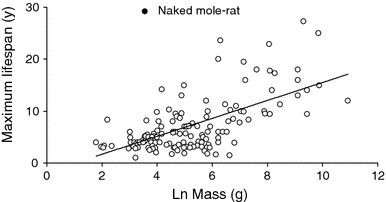
Why do different organisms have different rates of aging and different lifespans? Evolution shaped each species to survive. The fly’s lifespan worked for it given all its other constraints. Human lifespans are relatively long and they have worked for us so far. Certain other organisms like Greenland sharks and bristlecone pines have even longer lifespans. The variation is orders of magnitude.

It is very likely that we can reprogram flies to live 100x longer. I also think it is very likely that we can reprogram people to live 10x longer. It is at least conceivable. Rejuvenation of the critical parts of our complex bodies should in theory fight the loss of homeostasis. Epigenetic reprogramming is starting to provide a proof of concept.

Given the complexity of all living things, and especially humans, I think we need to first prove 10x lifespan extension in smaller organisms. Maybe flies, maybe worms, maybe yeast. If we can’t do it for those organisms, it seems very difficult to do it for humans. Maybe some brilliant researchers will bypass this step and solve it for humans? I'm not sure how they will.

We have the opportunity to create accurate models of aging. Right now aging is too complex and we only have overly simplistic models. With the twin innovations of big data / ‘omics and deep learning, we are poised for data-driven discovery of the complex, high-dimensional, combinatorial interactions driving aging. First things first: let’s get this working in simple organisms.

A recent paper tied the Black Plague in the 1400s rapid evolution in the human immune system. I believe we are again on the cusp of rapid evolution. We will begin to edit our genes and rejuvenate our bodies. Buckle up.

What new data could accelerate aging science?

Here are some of the very biggest questions in aging science as I see it:

  1. What is aging? How do you measure aging on shorter timescales than death?
  2. What drives aging? How? Is the epigenome the primary driver?
  3. What slows aging? How? Which of the various possible interventions work? What combinations of these interventions is optimal?
  4. What reverses aging? How? Does cellular reprogramming reverse aging?
  5. What should humans do to live longer and healthier? How personalized do interventions need to be? How do I know if I'm doing the right things for my aging?
  6. How can we develop a simpler model of aging to answer the above questions? While the particulars are different, almost every organism ages. Mammals are so large and complex, and we still don't understand many fundamentals. Could we start with C. elegans with ~1,000 somatic cells vs. ~37 trillion cells for humans?

What data could illuminate our understanding of these fundamental questions?

Here is a data pipeline that would be very interesting:

  • Start with a tiny, well-understood organism like C. elegans.
  • Do whole organism epigenomics, spatial transcriptomics, genomics and imaging across the full lifespan. Maybe 10-100 unique time points so you can see changes over time? This is a tremendous amount of data.
  • Identify spatio-temporal aging patterns.
  • Create a "biological clock" based on all this data.
  • Pick candidates for "drivers" of aging, e.g. epigenomic remodeling, and then intervene/perturb to return towards "youthful" state.
  • Elucidate drivers of aging and methods for slowing and reversing aging.
  • Once this works, expand to larger and larger organisms.

I'm sure others have considered this kind of approach. Why aren't we doing it today?

Protein language models, epigenetic reprogramming, aging clocks... and herd mentality

These are some of the hottest topics right now. I've learned in that last week that each of them has armies of brilliant people working on them. 

1. Protein language models. These have the potential for algorithms to learn fundamental dynamics of protein folding and interaction. This could get us one step closer to modeling human biology. Once we can model human biology at the molecular and cellular level, our ability to model disease and interventions will be far better than today. Brilliant AI researchers at Facebook and DeepMind are working on this. Brilliant researchers are dozens or more labs around the world on working this.

2. Epigenetic reprogramming. Partial epigenetic reprogramming has been shown to rejuvenate cells, tissues and even whole mice. There are concerning off-target effects (cancer is a particular concern). The potential for slowing and reversing aging is easy to see. It could be the great human breakthrough of the 21st century. There are dozens if not hundreds or thousands of labs around the world working on this. Startups like Altos Labs ($3 billion of initial funding!), NewLimit and many others are on the case.

3. Aging clocks. How do you measure aging, beyond waiting to see if someone dies or not? This is an important questions. You can't manage what you can't measure. There are compelling epigenetic clocks, plus a whole host of new biomarker clocks, transcriptomic clocks, proteomic clocks, etc. There are many brilliant people in academic and industry labs working on this.

Does this mean I and others in the field should go work on these topics?

It depends. I think it's great that we have so much energy on these 3 important topics. It increases the chance that we get answers and progress on them faster. And there are people who thrive in an all-out race to see who can be first. At the same time, science (and investing and most human endeavors) are prone to herd mentality. We need smart people exploring the dusty corners of biology and aging. Unpopular ideas are often ultimately right. Some people do their best work with the peace and freedom of unpopular fields

Stanley B. Prusiner of UCSF writes about this in his 2014 book, Madness and Memory: The Discovery of Prions--A New Biological Principle of Disease. The research community met his early theories with disdain. Yet, he was ultimately right in his views on prions and brain disease.

My view is that we should follow closely the latest breakthroughs and trends in our fields. There are new ideas that can be transformative. It can be easier to get funding and energy when you're on a popular topic. At the same time, scientific researchers should follow their best judgment, even if it leads to an unpopular place.